
The Real Cost of the Last Mile in European Parcel Delivery – and What Webshop Owners Can Do About It
Hello entrepreneurs and logistics lovers — René here from Kolibri Logistics. Let’s talk about a part of the e-commerce supply chain that often looks simple but eats away at your margins like a pigeon on a croissant in Paris: the last mile. Understanding the costs of the last mile is crucial for maintaining those margins.
It’s that final stretch from your warehouse (or fulfillment center) to the customer’s front door. Sounds short and sweet, right? Well, not quite. In Europe, that last mile can account for up to 50% of total shipping costs.
Let’s dive into what drives those costs of the Last Mile, why Europe is extra tricky, and what you, as a webshop owner, can actually do to stay profitable — without losing your sanity (or customers).

Preparing parcels for the Last Mile delivery.
What is the Last Mile — and Why Is It So Expensive?
The “last mile” is the final step of the delivery process: from the warehouse, distribution hub, or sorting center to the customer. And even though it’s physically the shortest part of the journey, it’s the most complex and most expensive.
Why?
- Labor costs (delivery drivers aren’t working for smiles)
- Fuel or electricity (especially with growing green requirements)
- Parking, urban restrictions, and traffic jams
- Missed deliveries → second attempts
- Tight delivery time windows
- Technology (tracking, routing, scanning – all costs money)
In Europe, due to dense cities, strict regulations, and high wage levels, the last mile can cost anywhere from €7 to €12 per parcel, depending on the country, city, and type of delivery.
What Drives Last Mile Costs in Europe?
| Factor | Cost Impact | Example |
|---|---|---|
| Fuel & energy | High diesel prices and investment in EVs add to variable and fixed costs. | Electric vans for zero-emission zones aren’t cheap. |
| Labor | Western Europe has high wages and delivery takes time in tight urban areas. | A driver stuck in traffic = more cost per parcel. |
| Urban delivery challenges | Parking fines, long walks to doors, delivery bans for larger vans. | Big cities love their pedestrian zones. |
| Failed deliveries | When no one’s home, that’s time and fuel wasted. | Re-attempts can increase last mile cost by 10–30%. |
| Customer expectations | Free shipping, next-day delivery, narrow time windows. | Your customer wants speed, but it costs you. |
| Green regulations | Clean zones, CO₂ limits, electric-only deliveries. | Many EU cities will fine you for emissions or block polluting vans. |
What Does That Actually Cost?
Costs vary a lot depending on region, shipping method, and volume. Here’s a rough breakdown:
- Home delivery in EU cities: €7–€12+ per parcel
- Pickup points or lockers: Can save you €2–€4 per delivery
- Same-day delivery: Add another 20–40% on top
- Failed deliveries: Add an extra €1–€3 per parcel attempt
- Returns: Double the trip, double the cost
And let’s not forget: your customer expects all of this for free.
How Webshop Owners Can Influence Last Mile Costs
Now for the good part: you’re not powerless. There are smart, practical ways you can reduce the impact of last mile costs — and even turn it into a competitive advantage.
1. Location, location, location
Where your inventory sits matters. Storing it in a strategic fulfillment center (like ours in the Netherlands ) gives you faster, cheaper access to Germany, France, Belgium, the UK, and more.
→ Closer to the customer = fewer kilometers = lower costs.
2. Offer pickup points and lockers
Home delivery is expensive. Many customers are happy to collect from a locker or pickup point — and it saves you significantly per shipment.
→ Bonus: fewer failed deliveries!
3. Give smarter checkout choices
Let customers choose: fast or free? Home delivery or pickup?
→ Use delivery incentives like “Free shipping from €X” only for the cheapest option (like locker delivery).
4. Bundle orders & optimize packaging
Don’t ship 3 boxes for 3 socks. Use smart packaging and consolidate items.
→ Fewer parcels = lower last mile costs and less waste.
5. Use better data
Bad addresses = failed deliveries = high costs.
→ Validate address input, monitor delivery success, and use software to optimize routes and predict trouble zones.
6. Outsource to partners with scale
You don’t have to do it all yourself. A fulfillment partner like Kolibri Logistics already has the tech, the teams, and the carrier contracts.
→ We negotiate better rates, optimize routes, and help you scale without burning out.
7. Embrace sustainability as a strategy
Eco-friendly delivery isn’t just good for the planet — it’s becoming a legal requirement in more and more cities.
→ Work with partners that use electric vehicles, cargo bikes, or carbon-neutral delivery — and use sustainability as a marketing asset.
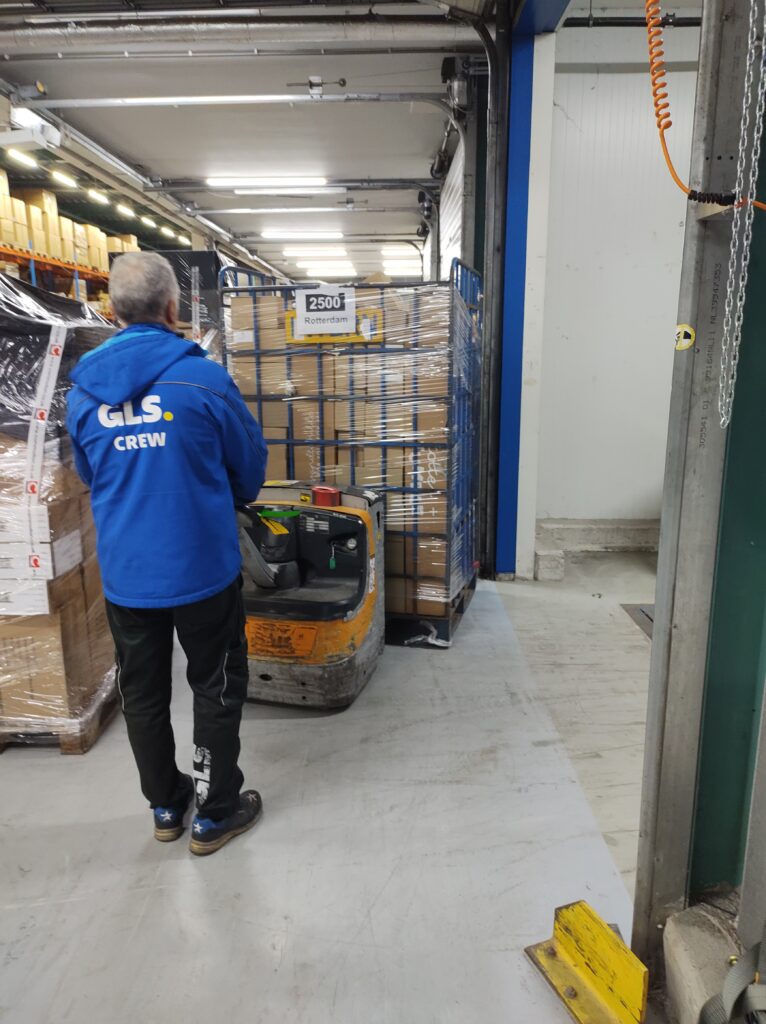
Carriers collect every day parcels that are ready to go for the Last Mile.
Real-World Scenario
Let’s say you run a home decor webshop with customers in the Netherlands, Germany, and Belgium.
You:
- Only offer home delivery
- Ship every product in its own box
Result: High delivery cost, high failure rate, customer frustration.
Now let’s tweak it:
- Offer pickup point delivery with an incentive
- Bundle multiple items per shipment
- Use a fulfillment partner who negotiates better shipping rates
Result? Lower last mile costs, fewer complaints, faster deliveries, and more profit per order.
Final Thoughts
The last mile in Europe is challenging, expensive, and full of red tape. But it’s also where you can make a real difference — both in your customer experience and your bottom line.
At Kolibri Logistics, we believe fulfillment shouldn’t be a headache — it should be your hidden superpower. With smart warehousing, scalable solutions, and a human approach to logistics, we help webshop owners, producers and wholesalers stay agile and cost-effective across Europe.
Want to know how much we can save you on last mile delivery?
Or just want to vent about delivery drivers who knock once and run?
Let’s talk.
Kolibri Logistiek is at play in the field of logistics. And we play at Champions League level! We cover your supply chain from collecting your products at location of production up to the last mile to your customers. Request a quote!
Schedule a Meeting With Us:
 Schedule via Outlook